Visar inlägg med etikett Roma. Visa alla inlägg

onsdag 8 november 2017

Miraklet i Mirkovo


Förra veckan var jag med på en missionsresa till Bulgarien i Life Missions regi. Vi predikade glädjens evangelium i staden Pazardzjik med omnejd. Efter mötena fick vi be med många till frälsning och när vi bad för sjuka blev de flesta som kom fram helade och upprättade.


Vid ett tillfälle hade vi ett möte i Pingstkyrkan i Mirkovo som ligger i den romska delen av samhället. När mötet hade pågått en stund, kördes en svårt leversjuk romsk kvinna dit i bil av sina vänner. Hon satte sig nästan längst fram på den vänstra raden. Kvinnan var mycket sjuk och hade antagligen inte så lång tid kvar att leva. Under predikan svimmade hon av smärtan och lutade sig mot sin väninna som satt jämte henne. När kvinnans andning blev allt svagare och hennes läppar blev blåa, blev väninnan alldeles förskräckt. Jag blev orolig för henne la undan kameran och gick fram för att titta till henne, samtidigt som mig gick pastorn i församlingen fram och vi stadgade gemensamt upp kvinnan. Pastorn lugnade hennes väninna och sa att vi skulle be för hennes vän direkt efter predikan. 


När predikan var över gick vi genast fram till kvinnan, efter en stunds förbön där vi talade in helande och läkedom i Jesu namn rakt in i hennes lever, hostade hon till, bad om lite vatten och tog en djup klunk. När vi sedan frågade henne hur hon mådde sken hon upp och sa - SUPER med ett stort leende! Hon hade blivit fullständigt helad och var full av glädje och tacksamhet till Gud. Efter att hon hämtat sig en stund reste hon sig från bänken och gick sedan obehindrat omkring med ett stort leende på läpparna!


Dagen efter följde hon med den lokala pingstförsamling till den gemensamma Gudstjänsten i sporthallen Vasil Levski i Pazardjik. När mötet var slut ville hon dela sitt vittnesbörd, men innan hon kom till orda blev hon fylld av den helige Ande och föll till marken. Efter en stund reste hon sig upp på vingliga ben. När hon sedan vittnade om helandet och vad Gud gjort i henens liv strålade det om henne och hon berättade för alla i sporthallen om vilket mirakel Gud gjort i henne. Som avslutning lyfte hon händerna mot himlen och sa “Slava na Boga, Slava na Jezusa (Prisa Gud, prisa Jesus)!”


Text och foto: Mikael Good

*Av respekt för kvinnan har jag valt att inte skriva hennes namn eller bostadsort.

onsdag 8 juni 2016

A cold wind is blowing over Europe


There are many different rumors surrounding the Roma people from Bulgaria and Romania who leave unemployment and exclusion to travel to countries in Northern Europe in a desperate attempt to find jobs and income to provide for their families back home. These rumors are unfounded and play on people's prejudices.


Similar to the Jewish people, the Roma people have almost always been subjected to prejudice and hostility due to their ethnicity. Antigypsyism takes various forms and varies in strength, ranging from everyday prejudices to furious hatred leading to bloodshed and even cold-blooded murder. There is an increase in both antisemitism and antigypsyism in Europe, with hateful expressions echoing on the streets of cities across the continent. Jews face hatred from Islamists, while Romas are targeted by right-wing extremists who judge and punish them based on their ethnicity.

In Sweden, there are approximately 4,000 Romas from Romania and Bulgaria who beg, sell handicrafts, do odd jobs, or collect returnable bottles. Although their numbers are not large, they have stirred strong emotions among the Swedish people. While some individuals seek to help them achieve a better future, certain groups, particularly right-wing factions, have seen an increase in antigypsyism. In some cases, this hatred has led to vandalism, arson, assault, and bloodshed.


In Sweden, there are approximately 4,000 Romas from Romania and Bulgaria who beg, sell handicrafts, do odd jobs, or collect returnable bottles. Although their numbers are not large, they have stirred strong emotions among the Swedish people. While some individuals seek to help them achieve a better future, certain groups, particularly right-wing factions, have seen an increase in antigypsyism. In some cases, this hatred has led to vandalism, arson, assault, and bloodshed.

False rumors spread by right-wing extremists claim that Roma people live a luxurious life back home, owning expensive cars and houses filled with luxury items and electronics. These rumors are often propagated by those seeking to rid Sweden of poor Roma migrants. Right-wing extremists base their assertions on rumors and outright lies, having never visited the villages where the migrants come from.


Having visited some villages in Romania where Roma migrants in Sweden originate, I have witnessed firsthand that many live in deep poverty. The harsh living conditions do not align with the propaganda spread by right-wing extremists. I now understand why some Romas leave their families to travel to Northern European countries for work and income. If I were unemployed with no other options, I might also resort to begging as a desperate means to provide for my children.

A cold wind of nationalism is sweeping over Europe, tightening its grip on more people. Hate is on the rise, and there is an imminent risk of pogroms against Romas in many European countries. Both Jews and Romas face the threat of harassment or assault by extremists when moving freely. It is crucial that we learn from history to avoid repeating the mistakes of the 1930s when hate against Jews and Romas, fueled by rumors and lies, set Europe on fire.

The best way to overcome prejudice and negative stereotypes is to get to know people, build mutual understanding, and create bonds between individuals from different countries and ethnicities. It is time to put our dark European history behind us and include Romas and Jews in our European community. "Roma" is Romani for human. Regardless of nationality, ethnicity, religious belief, and gender, we are all human, and God loves us just as we are.


Text and Photo: Mikael Good


torsdag 2 juni 2016

Joy and music welds them together


Although Roma people has been subjected to persecution and oppression for generations in Europe. Despite all the difficulties they have been through, they are always close to a smile and a good laugh. Joy and music welds them together and has become a way for them to escape from all the hatred and oppression that they are constantly subjected to.

Text and Photo: Mikael Good

onsdag 25 maj 2016

Black and white are the colors of photography


This is Maria and Ismael. They are Romas and come from a Romanian town. I learned to know them in the summer of 2014. I used to visit them and their friends at their camp in Huskvarna. I hope that I shall be able to visit them, their children and grandchildren in Romania in the nearby future. A color version of the photo has been published in a Swedish Magazine. But personally I prefer this black and white version.

It happens every now and then that I get the question why I prefer black and white? Robert Frank has already given a better answer to that question and therefore I choose to quote him:
- Black and white are the colors of photography. To me they symbolize the alternatives of hope and despair to Which mankind is forever subjected. 

Text and Photo: Mikael Good


lördag 30 april 2016

The reason why I work for Roma rights


The film "Time of the Gypsies" by Emir Kusturica opened up my eyes for the situation for Roma people on the Balkans. I saw it many times and I still recon it as one of the best films that I ever seen.


But it was not until 2002 that I started to take a active part in the work for the inclusion of Roma people. A article by the Romanian sociologist and Roma rights activist Nicolae Gheorghe opened my eyes for the tough situation for Roma people in Romania. He had been working for Roma people since the mid 70s together with his fellow Roma activist Professor Vasile Burtea.

Last year I met Professor Vasile Burtea for an interview and he spoke with great honour about his good friend Nicolae Gheorghe who passed away in 2013. Nicolae was a one of the most carismatic Roma leaders in Europe and his work has been very important for Roma rights in Europe.

In 1993 Nicolae and Vasile founded the first Roma NGO - Romani Criss (the Centre for Social Intervention and Studies) with the intention to provide Roma people with education and work in the formal economy. 

Nicolae who spent almost 35 years working for Roma issues in various roles had a wider dream for the Roma people. His dream was that Roma people should be included in the nations were they live and also represent a wider society that is freer and more boundless than the national state.

Text and photo: Mikael Good

lördag 16 april 2016

Dik Manusch - See the people


A couple of years ago I met this man in a romani village in Romania. Even if we couldn't speak the same language I was able to have a good chat with him and his boys in a mixture of Russian, Spanish, Italian and English. When I had spoken to him for a while I asked him if it was ok to take his photo. He said yes with a smile. 


My photo of the Romani man ended up on the cover of Dik Manusch (romani for see the person) Magazine. Dik Manusch is a street Magazine that are sold by homeless EU-migrants in Sweden. The salesmen and women are primaly Romani people from Bulgaria and Romania. The magazine costs 50 SKR and the whole profit goes to the seller. The idea behind the magazine is to help people to retain their dignity and to be able to support themselves.

Everyone who works with the magazine works on a voluntary basis. Printing are paid by sponsors or by activist groups around the country were Dik Manusch is sold. You can buy Dik Manusch in Skellefteå, Luleå, Umeå, Södertälje, Katrineholm, Malmö and Stockholm.


Text and Photo: Mikael Good

fredag 8 april 2016

The International Romani Day


On April 8th, Romas from 40 countries celebrated their national day in memory of the first Roma Congress that was held in London on April 8th 1971. The Romani flag ((O styago le romengo) was introduced at the congress. The blue field in the flag symbolizes the sky, the green field ground and the red wheel symbolizes progress. The Roma national anthem Djelem, Djelem (I traveled, I traveled) was also introduced during the Roma Congress.


In 2000, proclaimed the International Romani Union (IRU) Romani Stan as Roma's own country without imposing any requirements on a territory. That the IRU choosed not to make demands on any territory is not surprising because one can say that the whole world is Roma's home country.

Much of the Roma culture, customs and their way of life have been shattered by discrimination, persecution and extermination throughout history. Up to 1 million Roma and Sinti might have been murdered by the nazis and their collaborators during the Second World War, nobody knows the exact number because the nazis didn't keep record of how many Romas that they killed. 


The persecution of Romani people should have ended in Europe when the evil nazi empire was finally defeated in May 1945. But instead Romas in Eastern Europe ended up behind the communist Iron Curtain and was deprived the few structures that had survived the nazi attempt to exterminate both the Romas and their culture. 

The discrimination in western Europe continued after the war and it was not until the late 1970s that Roma rights began to be discussed seriously. It took until 1982 before the West German government recognized that the Romani people beside the Jewish people were subjected for the Holocaust.


Romani people in Eastern Europe had hopes that they would get better life after the end of communism in 1989/1990. The hope was never fulfilled and instead the discrimination and persecution increased in many countries. Mainly because they were blamed for many of the bad things that the communist dictatorships had caused. There were even outright pogroms in some countries in Eastern Europe, houses were burned down and Romani men and even women were severely beaten and some were even killed because of their ethnicity.

Romani People are still treated as second-class citizens and are discriminated and persecuted in many countries where they have lived for nearly 1,000 years because of their ethnicity. There's a long way to go before the Romani People have been truly included into the European Community where they belong.


Romani people are happy people as you can see in the pictures. Despite all the difficulties they have been through they are always close to a good laugh. Joy and music welds them together and it has become a way for them to escape from all the hatred and oppression that they are often subjected to from the majority population. It's more than time that we put the history behind us and include the Romas in our society. It's also important to break down barriers between people and combat all the prejudices and stereotypes that hinder us from getting to know each other. 

Roma is Romani for human and regardless of nationality, ethnicity or religious belief we are all Roma. Jesus is love and he steps right over all the things that we humans like to sort into right and wrong and goes straight into our hearts and loves us just as the Romas (humans) that we are. Opre Roma!


Text and Photo: Mikael Good

torsdag 10 mars 2016

Lord I Just Wanna Go Home


This is Georgian he is a 30 year old Roma man from the North East of Romania. When he lost his job in Romania he went to Sweden in a desperate search of a job and a income in order to provide for his children back home in Romania. Despite many attempts, he was unable to find any work and was compelled to beg outside a store in Sweden to get some money that he could send home to his children. 

The singer/songwriter Johan Leidefors who has written the song Go Home about Georgian and the documentary photographer Mikael Good have got to know Georgian and they share a hope to be able to help Georgian and his family in some way. They have done a music video with a hope to raise money for the benefit of Georgian and other Roma people who beg on the streets in their hometown.


Put your donation on giro 545-6546 or "Swisha" your donation to 123 175 86 55. Mark the payment with "Church Aid - Go Home" (Collected funds will be administered by the Swedish Church in Huskvarna).

Text and photo: Mikael Good

onsdag 9 mars 2016

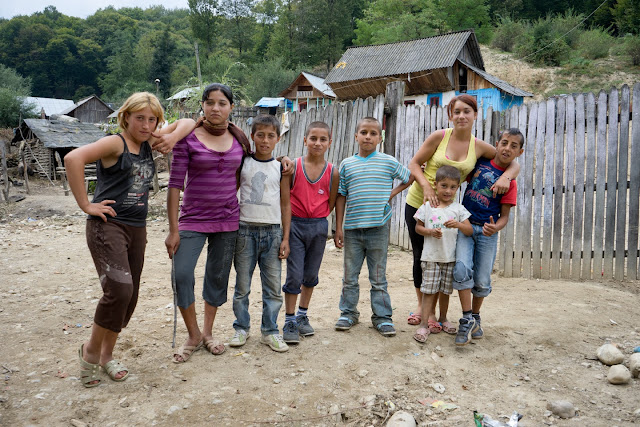
Life in Roma Villages in Romania


I traveled to Romania in September 2014 and visited Roma villages, the hometowns of some economic migrants who beg for money or collect cans and bottles in my hometown. My goal was to capture photos for a slideshow and write articles about the situation of Roma people in Romania.


There are numerous false rumors about Roma people that have been disseminated in Sweden and other North European countries by nationalist groups. These rumors claim that Roma people from Romania are wealthy, owning nice cars and houses, and leading a life of luxury funded by money obtained through theft and begging. The intention behind the slideshow is to reveal the actual living conditions in the villages from which the migrants originate, dispelling the misconception that their living standards are luxurious.


Music is an important component of the slideshow, and upon hearing the Roma musicians Catalin Vlad and Stefanica Gheorges' interpretation of Goran Bregović's song "Ederlezi," I decided to contact them and inquire about using their song. They agreed after reviewing my pictures.


Text and photo: Mikael Good

tisdag 8 mars 2016

It's like I've been born again


Ioana who is a mother of three children travelled from Romania to Sweden in early 2014 in a desperate attempt to earn the extra money that was needed for her children's education. She tried to get a job but soon she ended up on the streets of Stockholm were she begged for money from bypassers. During her stay Ioana became seriously ill and had to seek medical attention.


A good friend of her took her to a hospital where she underwent a number of tests to determine the cause of the disease. A doctor at the hospital informed her that she suffered from Hepatitis C and had a long time cirrhosis. The doctor gave her one or two years to live if she did not get a liver transplant. He prescribed medications to Ioana and advised her to go home to her family and spend her last days of life with them. Because she is a EU-citizen she had to go back to Romania to do the liver transplant.

Health care is free in Romania but the country has problems with corruption. In order to get the care you need you must either have the right contacts or give bribes. Those who have no contacts or money may choose to get poor care or no care at all. Ioana and her husband Vasile did not have the money that they needed to get medications or a liver transplant and her prospects was bleak.


Many Swedes were engaged in Ioanas situation after her story had been aired on ABC News in early 2014. They started to raise money for the benefit of her medications and liver transplantation. The Swedish NGO Heart to Heart was asked if they could set up a account and transfer the money to Ioana. They decided to transfer the collected money to Ioana without charging any fee.

A female reporter from ABC News and her team fought for Ioanas right to get a liver transplant. And thanks to all the media attention they created in both Sweden and Romania about Ioana she was finally included on the waiting list for a liver transplantation at a specialist clinic in Bukarest. After she undervent the transplantation a number of donors continued to give money to her so she could buy the expensive antiretroviral drugs she needed to survive until the surgery.


I met Ioana who is a very kind and gentle woman in her small house in a Romanian village in the middle on Romania in september 2014. She was very thankful to all the people in Sweden who had been engaged in her situation and helped her with their money and prayers. But she was also very worried about the future. Ioanas mother died when she was a young girl and she didn't want her own children to grow up without the love and support from their mother.
- I want to live as long as I can get to see my children grow up to be big. My mother died when I was small and I do not want my children to have to grow up without their mother, she said to me with tears in her voice.


A couple of weeks after I met Ioana, she received the good news that the vaiting was over and that she should get a liver transplant at a clinic in Bucarest. She received the transplantation at the clinic on november 4. After a couple of weeks of convalescence at the clinic she was healthy enough to go home to her husband Vasile and their three children Bianca, Adrian and Sebastian.


Ioana are doing well after the liver transplant but she have to continue to take retroviral drugs for the rest of her life, otherwise her body will reject the new liver.
- If it hadn't been for all the good-hearted people in Sweden I might have been dead. It feels like I've been born again since I got my new liver. I'm very grateful to everyone who has helped and supported me and who have been involved in giving me a new life.


Read more about Heart to Hearts Team Roma-project in the following link: http://english.hearttoheart.se/the-team-roma-project-2/

Text and photo: Mikael Good

onsdag 2 mars 2016

Karwan gives free haircuts to poor Romanians


Karwan and his colleague Natalie from the Swedish town Linköping have a barber shop called Salong New Look. They wanted to do something more for the poor people from Romania who begs for money outside shops and shopping mauls in Sweden. Rather than give them some spare coins they decided to give them free haircuts. I followed the first free customers to Salong New Look in Linköping. Some of them had never been to a barber shop before. Some of the pictures have been published in the Swedish Newspaper Expressen.

Click the link if you want to see more photos from the occasion: 
https://www.flickr.com/ph…/chasid68/albums/72157651492398976

Text and photo: Mikael Good

söndag 29 november 2015

Go Home - en musikvideo om vänskap


Sången Go Home av Johan Leidefors handlar om Georgian, en romsk man i 30-års åldern. På grund av arbetslöshet sökte han sig till Sverige i desperat jakt efter ett jobb för att kunna försörja sina barn hemma i Rumänien. Trots många försök fick han inte tag på något arbete och nödgades att tigga för att få ihop pengar. Johan Leidefors som har skrivit sången och dokumentärfotografen Mikael Good som har tagit bilderna har lärt känna Georgian och har engagerat sig i hans livsöde. De delar en förhoppning om att på något sätt kunna hjälpa Georgian och hans familj.

Syftet med musikvideon är att samla in pengar från allmänhet och företag så att Kyrkhjälpen Huskvarna/Jönköping ska kunna fortsätta sitt viktiga arbete med att ge ett värdigt mottagande till de utsatta EU-medborgarna som kommer till vår kommun och erbjuda dem mat att äta, kläder att sätta på kroppen, hygienartiklar och tak över huvudet.


Här kan du ta del av Johan Leidefors tankar bakom sången Go home 
Här kan du ta del av en del av Mikael Goods reportage och artiklar om romer

Sätt in din gåva på bankgiro 545-6546 eller Swisha gåvan till 123 175 86 55. Märk betalningen med ”Kyrkhjälpen - Go Home”. (Insamlade medel administreras av Svenska Kyrkan)

Eventuellt överskott från insamlingen kommer att investeras i EU-medborgarnas hemländer genom Erikshjälpen, Hjärta till Hjärta, SAM-hjälp, Metro Ministries Romania och Missionskyrkan i Huskvarna.

Tack på förhand

Johan Leidefors och Mikael Good